

The Calls Don't Stop
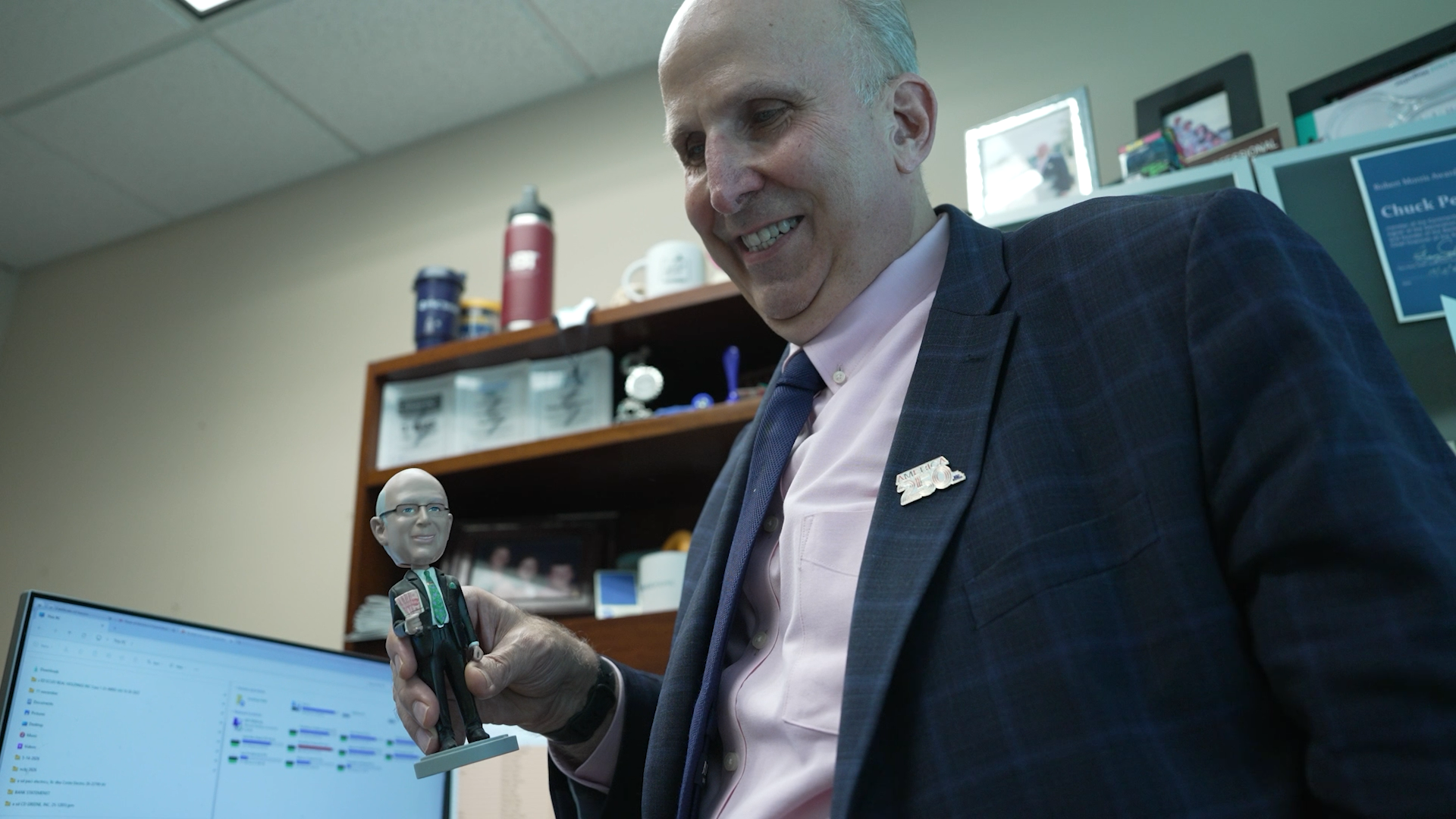

Charles (Chuck) Persing knows what happens when someone in a professional services office gets pulled into a large mailing.
The printing, the sorting, the envelopes, the postage… that part he’s familiar with. It’s the rest of the picture that he wants people to think about. The calls that come in while it’s happening. The client questions that go unanswered. The case work that sits. The three or four hours that get blocked out on the calendar and then don’t come back.
"The calls don’t stop. The day-to-day work still continues. Having this offload reduces our staff time that we can use for other things, reduces our cost, and increases our ability to actually bill for the work that matters." — Charles (Chuck) Persing
Over the course of a career that spans more than two decades, Chuck has worked as counsel to Chapter 7 trustees, as a receiver, as a liquidating trustee, as a Chief Restructuring Officer, as a Subchapter V trustee, and in roles that include closing pension plans for companies that have gone out of business. In sum, he has been inside A LOT of professional services offices. And he has a clear view of what should happen inside them and what shouldn’t.
CUSTOMER PROFILE
Role: Chapter 7 Trustee, Receiver, Liquidating Trustee, CRO, Subchapter V Trustee
Office Location: New York/New Jersey
Background: 20+ years across bankruptcy, insolvency, and pension plan closure work
Mail List/Volume Range: 15–20 recipients (routine notices) to ~1,000 (pension plan closures)
Services Used:
- Certificates of Service
- Print & Mail Services
- Certified Mail (adversary proceedings)
- Pension plan participant notices
- W-9 and creditor communications (liquidating trustee work)

Paperless in Prague
In July, Charles was on vacation in Prague when a motion and fee application needed to be filed and served. From his hotel room, at nine o’clock US time, three in the afternoon his time, he logged into Certificate of Service, attached the document and the service list, and submitted the job. It took about two minutes.
The confirmation came back and the next day he filed the certificate of service with the court before boarding a boat down the Danube.
This is what it means to have administrative infrastructure that doesn’t depend on an office, a printer, a postage meter, or a staff member being at her desk. The work got done. The trip continued. The filing was current and Chuck barely had to leave vacation mode.
That kind of flexibility where you’re able to handle a required mailing from anywhere, at any hour, without coordinating a physical process is part of what Chuck means when he describes Certificate of Service as a mainstay of his practice. But the Prague story is the illustration, not the argument.
Chuck’s argument for using a certified mailing provider like Certificate of Service, isn’t even about mailing but what the physical task of in-house mailing displaces.
The Challenge
What It Actually Costs to DIY Certified Mail
When firms think about the cost of handling a mailing in-house, the number that comes to mind is usually paper and postage. Charles starts the calculation differently because paper and postage won’t file themselves.
In his experience, a mailing handled internally requires blocking out a staff member for somewhere between three and five hours or even longer. That time includes setting up and verifying the list, printing and sorting the documents, assembling the envelopes, metering or stamping, and getting everything to the mail. It also includes supervision: someone has to make sure the job is right before it goes out.
But Chuck can’t help but think like an accountant
In trustee and receiver work, mailing costs are often reimbursable from the estate. A clean third-party invoice documents the expense clearly. An internal mailing produces no such invoice, just an estimate built from staff hours, supply costs, and postage that has to be reconstructed after the fact.
“Think of the time and materials it takes you to do it yourself, compared to having an invoice from Certificate of Service. I get one simple bill. I don’t have to account for the envelopes, the postage, the man hours… That’s all done through Certificate of Service."

The alternative, from Charles’s perspective, is submitting a job in about two minutes. He has the document and list (often pulled by COS directly from the bankruptcy case). He logs in, attaches both, and sends. What arrives back is a certificate of service he can file with the court. No assembly required.
And while that job is being processed, the calls keep getting answered.
Even Small Jobs Can Be Expensive
The natural assumption is that the math changes at scale. A thousand-person pension plan mailing, obviously worth outsourcing. A thirty-person creditor notice, maybe. Fifteen recipients? Surely that’s not worth the effort of submitting externally.
Charles disagrees and his reasoning is worth understanding carefully, because it’s not actually about volume.
“I use Certificate of Service for every mailing that I can because it just takes it. Instead of ruining the routine of the staff and the things that they have to do. Whether you do five pieces of mail or a thousand pieces of mail, it takes a minute to set it up.”
The word he uses is “non-routine.” Even if a mailing is something that happens when it happens, not on a fixed daily schedule. That means every time it comes up, it requires someone to stop what they’re doing, shift into a different kind of work, gather materials, execute a physical process, and then find their way back to where they were.
The question isn’t whether your staff can handle a small mailing. They can. The question is what it’s interrupting.
Certificate of Service's Human Oversight Still Matters
Once when Chuck submitted a mailing for a pension plan closure the recipient list was unusually large (over a thousand people). Within minutes of submitting the job, his phone rang. It was Certificate of Service calling to confirm: was the list correct? Did he really intend to send to that many recipients?
“They called me up, maybe five minutes after I processed the list. It’s happened where I’ve done some things wrong, put the wrong list on, something like that. Certificate of Service has been very helpful.”
A large mailing to the wrong list is a significant problem: operationally, financially, and in terms of the legal record it creates. The fact that someone noticed the unusual volume and picked up the phone before processing it isn’t a small thing.
Outsourcing the work doesn’t mean removing judgment from the process. It means repositioning where that judgment is applied.
What Actually Belongs In-House?
Charles’s use of Certificate of Service started with standard bankruptcy noticing and expanded from there. Pension plan participant notices. W-9 requests to creditors in liquidating trustee work. Shareholder communications. Notices that didn’t go through the court at all, but still needed to reach a defined list of recipients in a documented, reliable way.
The pattern he describes is recognizable to anyone who has thought seriously about how professional services firms allocate their people: once the infrastructure for a task exists outside the office, professionals start identifying other tasks the same infrastructure could handle. The question stops being “can we do this ourselves?” and starts being “why are we?”
“You’ve got to interact with your client, gather the facts, go to court. Spending three or four hours supervising a mailing internally just doesn’t make any sense. It gives you more time to do the money work, aka the things that really earn your fee.”
The phrase “the money work” is worth sitting with. Charles isn’t describing a time-saving convenience. He’s describing a reallocation: move the work that doesn’t require professional expertise to the place where it can be handled most efficiently, and reclaim the capacity for the work that does.
That’s a broader question than mailing. It doesn’t have a universal answer. But it starts with an honest accounting of what’s actually happening inside an office: what people are spending their hours on, what those hours are displacing, and whether that trade-off still makes sense.
What work is your office still doing internally simply because you’ve always done it that way?


Stay informed and efficient


