.png)

Théda Page is Here to Reconstruct Lives. Not Stuff Envelopes.
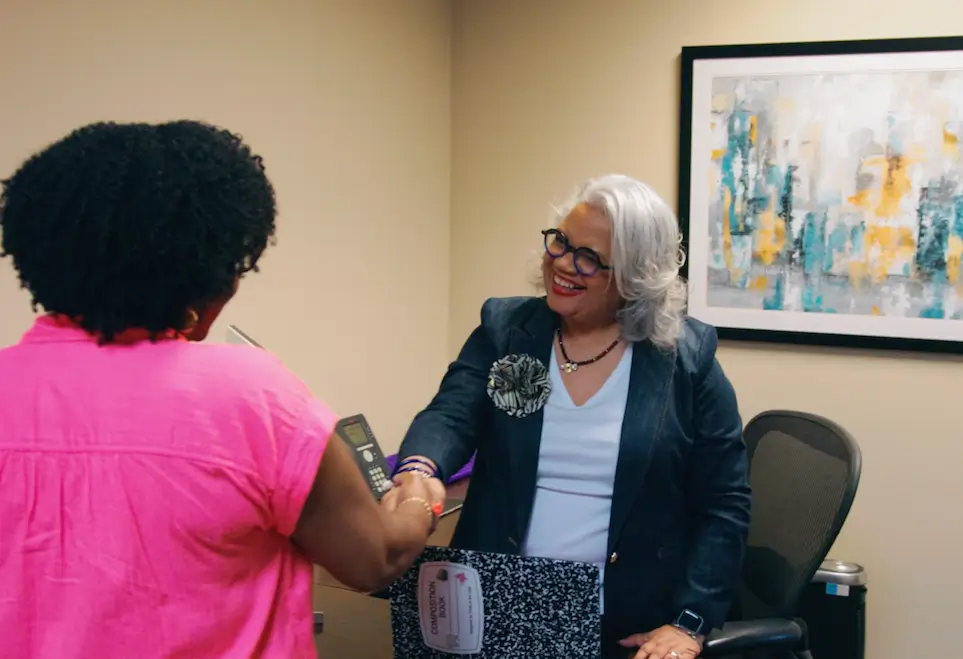

Théda Page founded The Page Law Firm nearly 25 years ago with a single purpose: help people rebuild after financial collapse. Every hour she spends on administrative work is an hour she isn’t spending on her mission. Certificate of Service makes sure the math works in her clients’ favor.
KEY STATS
- Nearly 25 years in practice
- Fully virtual support staff. No in-office team, no in-house mailing operation.
- Eliminated a process that cost an estimated $200–$300 per mailing in attorney time
- Staff time redirected to intake, case management, and client service
- Created a Loom training video so every new assistant is up and running on CoS from day one
“People think technology makes a law firm less personal. The opposite is true.” — Théda Page, Founder, The Page Law Firm
About The Page Law Firm
Théda Page has been a bankruptcy attorney for nearly 25 years. She founded The Page Law Firm in the Dallas–Fort Worth area with a clear philosophy: her job is to help people reconstruct their lives after financial hardship giving them the fresh start bankruptcy is designed to provide.
Today the firm operates with Théda as the sole attorney, supported by a fully virtual team: an intake coordinator, a case manager who handles document flow to bankruptcy trustees, and a paralegal who handles initial drafting. No one is in the office full-time. Everything runs digitally. And the one task that could never be done digitally is physical mailing and noticing which goes to Certificate of Service.
CUSTOMER PROFILE
Company: The Page Law Firm
Industry: Legal / Bankruptcy & Family Law
Firm Size: Solo attorney + fully virtual support staff
Location: Plano, TX
Customer Since: Long-term customer; exact start date unknown “I don’t even know how long I’ve used Certificate of Service”
Services Used:
- Certificates of Service
- Print & Mail Services
- Certified Mail
The Challenge
A Process That Consumed Time That Should Have Gone to Clients
Before Certificate of Service, every mailing required a small production run. A filing would come back from the court electronically, then Théda or a staff member would print it, reduce it to four pages per sheet to save paper and cost, copy it front and back, generate labels for every creditor, stuff each envelope by hand, run everything through Stamps.com for postage, and get it to the post office.

A Chapter 13 case might have 30 to 35 creditors. Some cases required three or four separate mailings. And the printer had a habit of jamming at the worst possible moments.
“Doing a mailing in-house is a very labor-intensive task. Lots of copying, stuffing envelopes, and putting postage on envelopes.”
The work wasn’t complicated. Théda knows this. At one time, she hired her godchildren in middle school to help stuff envelopes during busy periods. One of them figured out that taking longer meant more hourly pay and turned working slowly into a competition with a sibling. Théda was impressed by the logic. But the point stands: This was not attorney work. It was never attorney work.
The Turning Point
Fear of the Unknown and Then the Math
Théda doesn’t remember a specific moment when she decided to make the switch. What she remembers is the resistance that came before it—the same resistance she now sees in colleagues who are still doing mailings in-house.
“It was just the unknown. That’s why I describe it as fear of the unknown. Bankruptcy lawyers are old and crotchety… and I’m talking about myself, too.”
Eventually the calculation became impossible to ignore. At a $425 billable rate, a 30-minute mailing (assuming no printer jams, no label misprints, no supply runs) costs the practice somewhere between $200 and $300 in lost attorney time. Per mailing. And that estimate doesn’t account for the mood that follows a paper jam at 4:30 PM on a deadline day.
Once she started using Certificate of Service, the reaction was immediate and unambiguous, and the cost became unimportant, according to Théda “I literally do not know what it costs. But I know what it would cost me to do it.”
Four Clicks. Done.
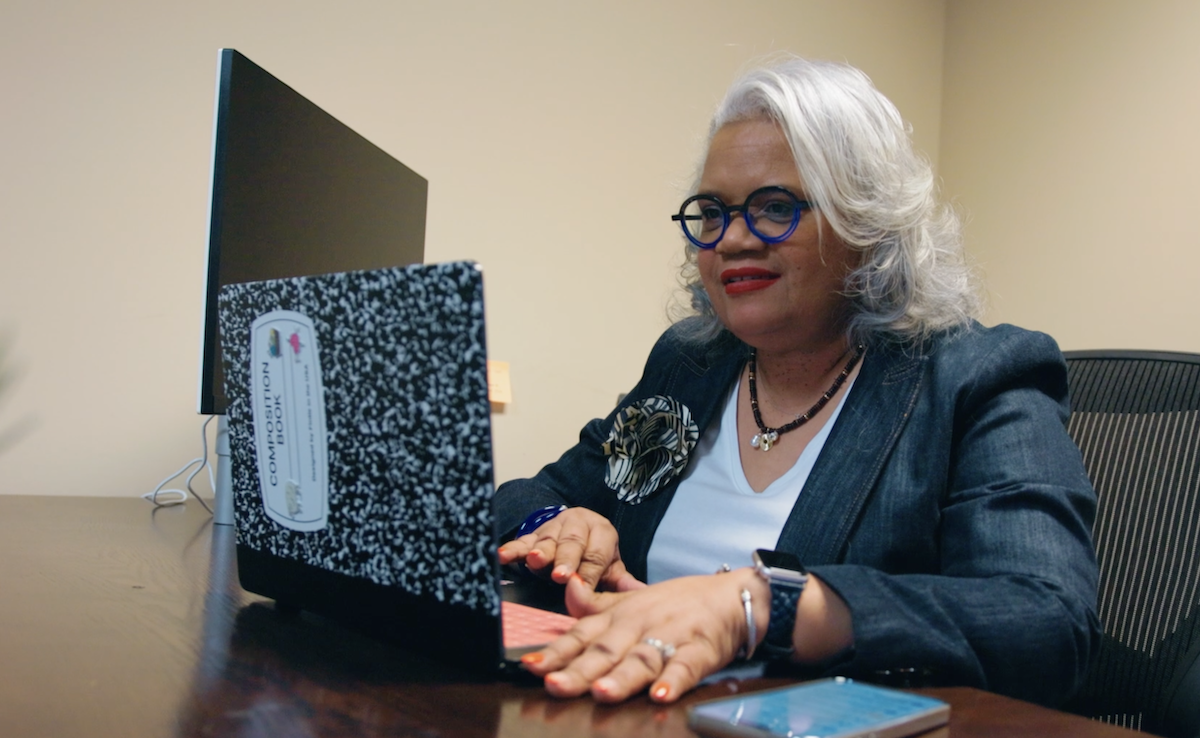
Today, when a filing requires noticing, Théda sends a single email to her virtual assistant with one subject line: Certificate of Service. Her assistant takes the filing and the mailing matrix from the court, logs into the platform, uploads both, and submits. The whole process takes less than five minutes.
“It almost seems like it’s instantaneous. I know it isn’t, but it’s that fast.”
The system has now become so embedded in how the firm operates.
The Impact? Billable Time Goes to Clients, Not Envelopes.
The most important thing Certificate of Service does for The Page Law Firm is liberate where attorney time actually goes.
Every minute Théda or her staff spends on a mailing is a minute not spent answering a client question, preparing a filing, coordinating with a trustee, or moving a case forward. The clients hiring Théda aren’t thinking about any of that. They’re thinking about their financial situation and whether she can help them through it.
“Clients don’t hire lawyers because they’re great at photocopying, stuffing envelopes, and slapping on stamps.”
Technology Makes the Practice More Personal, Not Less
Théda is direct about the assumption that keeps some attorneys from adopting tools like Certificate of Service: the idea that outsourcing or automating parts of the practice makes it feel less personal to clients. She disagrees and has her own logic that runs the other way.
When administrative work is handled, the attorney is more available and present for the conversations that actually matter. They’re more focused on the problems clients actually need solved. The technology creates the conditions for better service, not a substitute for it.
Looking Ahead
According to a judge in Théda’s district, bankruptcy filings may be up as much as 57 to 67 percent. The demand is real and growing. For solo and small firm attorneys, most know a busy period is upon us or coming soon. The question becomes whether they’ll have the capacity to serve everyone who needs them.
For Théda, the answer is to automate admin tasks that don't require a law degree with trusted vendors who do the work better, cheaper, and faster.
“If Certificate of Service can handle the administrative work, that means I have more time to do the actual work that I love, which is helping people reconstruct their lives.”

Stay informed and efficient


